Field notes · Fiber sensing
What are we comparing when we compare sensing cables?
Notes from Chengdu on coupling, source repeatability, and comparing measurements on the same basis.
In the Chengdu experiments, we compared DAS records across cable configurations and burial depths, with nodal geophones as a reference. It is tempting to look at the biggest waveform and call that the best cable. The comparison turned out to need more care.
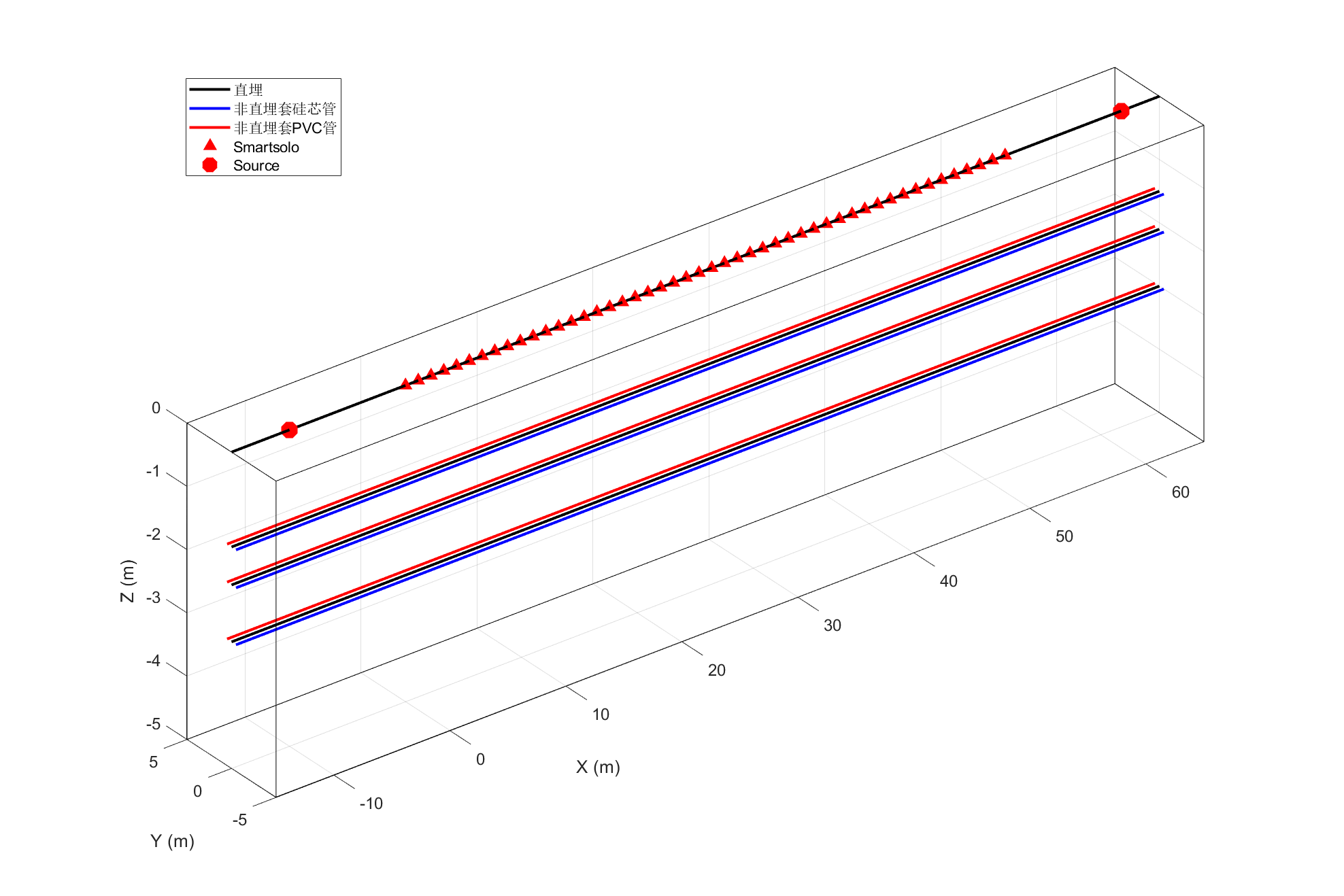
First, the source has to be comparable. Two hammer blows are never quite identical. The processing notes therefore checked waveform similarity and considered source-energy differences before comparing the recordings.
Second, the instruments measure different quantities. The reference geophones record ground velocity, while these DAS records describe strain rate. Comparing their raw amplitudes directly can give a misleading answer. Instrument response, direction, spatial differencing, and gauge length all matter when putting them on a common basis.
Third, the installation is part of the measurement. How the cable is coupled to the ground and how deeply it is buried can change what reaches the fiber. The experiment showed differences among the tested arrangements, but I would not turn those comparisons into a universal ranking of cable types.
My main takeaway is a question to ask before every comparison: are we seeing the cable, the installation, the source, or the processing? Keeping those effects separate makes a modest field experiment much more useful.
Basis of this note
Based on the Chengdu DAS and reference-geophone processing slides, including source-repeatability checks and measurement-conversion notes. No universal cable ranking is claimed.