Field notes · Traffic
Watching traffic through ground vibrations
What a few roadside seismometers taught us about passing vehicles and moving sources in Hainan.
Passing vehicles leave a record in the ground. In our Hainan work, we used roadside seismometers to explore how much of that motion we could recover from vibration alone.
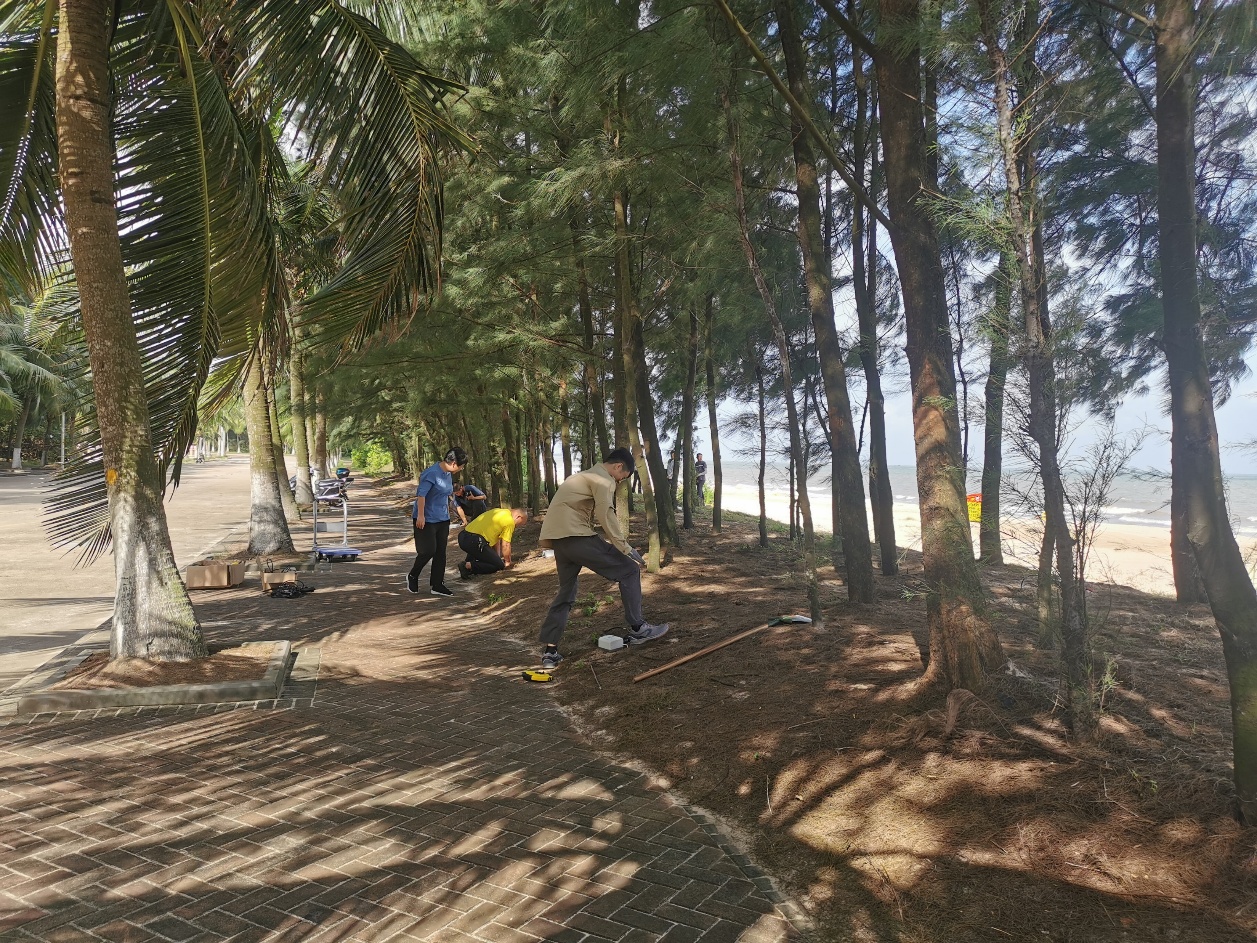
A single station can mark a passage as the signal grows and fades. Adding stations gives us timing differences, which can help estimate direction and speed under the assumed road and wave-propagation geometry. With an array, we can shift and combine the recordings to look for a moving source.
The report includes examples of vehicles following one another and vehicles moving in opposite directions, alongside corresponding video records. In the resulting plots, the motion becomes easier to follow than it is in a single waveform. Those examples are what made this work memorable to me.
There are limits. Nearby sources can overlap, ground conditions affect propagation, and a useful-looking track still needs an independent check. Some speed values differ between the field notes and analysis outputs, so I would not use this material to claim a validated speed accuracy. The traffic examples described here come from seismometers; they should not be relabeled as DAS results.
I see this as a useful way to ask more of an ordinary vibration record. Before treating it as a traffic counter, I would compare complete time windows with video, including missed vehicles and false detections.
Basis of this note
Based on the Hainan seismometer analysis report and vehicle-signal slides from 2023. Examples support a field-study account, not an independently validated traffic-monitoring benchmark.